How to Create a Family Budget: Step-by-Step Guide for 2026
How to Create a Family Budget That Actually Works
Creating a family budget isn't about restriction—it's about intention. It's the difference between wondering where your money went and telling it where to go. Whether you're newlyweds combining finances or parents trying to save for your kids' future, a solid family budget is your foundation for financial success.
Why Every Family Needs a Budget
Without a budget, money decisions happen by default, not by design. Studies show that families who budget:
- Save 20% more on average
- Report less financial stress
- Have stronger relationships
- Achieve financial goals faster
A budget isn't a sign that you can't handle money—it's a sign that you're serious about your family's future.
Before You Start: The Right Mindset
It's a Team Sport
Both partners must be involved. A budget created by one person and imposed on the other will fail. Make it collaborative from day one.
Progress Over Perfection
Your first budget won't be perfect. That's okay. You'll refine it over time as you learn your family's patterns.
Flexibility Is Key
A rigid budget breaks under pressure. Build in flexibility for life's surprises.
Step 1: Gather Your Financial Information
Before creating your budget, collect:
- Income documentation: Pay stubs, freelance income, side hustles
- Bank statements: Last 3 months minimum
- Credit card statements: All cards, all statements
- Bills: Recurring and one-time expenses
- Debt information: Balances, interest rates, minimum payments
Step 2: Calculate Your Total Household Income
Add up all income that comes into your household:
- Salaries and wages (after tax)
- Bonuses (use a conservative estimate)
- Side hustle income
- Investment income
- Child support or alimony
- Government benefits
- Rental income
"Budget based on your reliable income. Windfalls and bonuses can go straight to savings or debt."
Step 3: Track Your Current Spending
You can't improve what you don't measure. Categorize every expense from the past 3 months:
Fixed Expenses
- Mortgage or rent
- Car payments
- Insurance (home, auto, health, life)
- Subscriptions
- Loan payments
- Childcare
Variable Essentials
- Groceries
- Utilities
- Gas and transportation
- Medical expenses
- Clothing
- Personal care
Discretionary
- Dining out
- Entertainment
- Hobbies
- Shopping
- Kids' activities
Savings & Debt
- Emergency fund
- Retirement
- College savings
- Extra debt payments
Step 4: Set Your Family Financial Goals
What are you working toward? Common family goals include:
Short-term (within 1 year):
- Build $1,000 emergency fund
- Pay off one credit card
- Save for holiday gifts
Medium-term (1-5 years):
- Build 3-6 months emergency fund
- Save for family vacation
- Pay off car loan
Long-term (5+ years):
- Save for down payment
- Fund children's education
- Build retirement wealth
Write these goals down. When budgeting gets hard, they'll remind you why you're doing this.
Step 5: Create Your Budget Categories
Based on your tracking and goals, create categories that make sense for your family. Here's a starter template:
Income
- Partner 1 salary
- Partner 2 salary
- Other income
Housing
- Mortgage/Rent
- Property tax
- Home insurance
- Maintenance fund
Transportation
- Car payment
- Gas
- Insurance
- Maintenance fund
Food
- Groceries
- Dining out
Utilities
- Electric
- Gas
- Water
- Internet
- Phone plans
Insurance & Health
- Health insurance
- Life insurance
- Medical expenses
- Prescriptions
Children
- Childcare
- School expenses
- Activities
- Allowance
Personal
- Partner 1 spending
- Partner 2 spending
Entertainment
- Subscriptions
- Entertainment
- Hobbies
Savings
- Emergency fund
- Vacation fund
- Kids' college
- Retirement
Debt Payoff
- Credit cards
- Student loans
- Other loans
Step 6: Assign Dollar Amounts
Now comes the math. Allocate your income across categories until every dollar is assigned.
Start with:
- Fixed necessities (housing, utilities, insurance)
- Variable necessities (groceries, gas)
- Debt minimum payments
- Savings goals
- Everything else
If expenses exceed income, look for cuts in discretionary categories first.
Step 7: Choose Your Budgeting Method
Envelope Budgeting
Assign money to virtual "envelopes" for each category. When an envelope is empty, spending stops. FamilyJar uses this method. New to envelopes? Start with Envelope Budgeting for Beginners.
50/30/20
Allocate 50% to needs, 30% to wants, 20% to savings. Simple but less detailed. Learn how this works for families in The 50/30/20 Budget Rule for Families.
Zero-Based
Every dollar gets assigned until income minus expenses equals zero. See our full guide: Zero-Based Budgeting for Households.
Hybrid
Combine methods—use 50/30/20 for big-picture allocation and envelopes for detailed tracking.
Step 8: Implement and Track
The best budget is the one you'll actually use. Tips for success:
Make It Easy
Use an app like FamilyJar that both partners can access. Manual spreadsheets often get abandoned.
Log Expenses Daily
Waiting until month's end to categorize expenses leads to forgotten purchases and frustration.
Review Weekly
A quick 15-minute check-in keeps you on track and catches problems early. Need a structure? Try our family budget meeting format.
Adjust Monthly
At month's end, review what worked, what didn't, and adjust for next month.
Involving Kids in the Family Budget
Age-appropriate financial education builds money-smart kids. For more strategies, read Teaching Kids About Money.
Ages 4-7
- Teach needs vs. wants
- Let them see you budget
- Give small allowance to manage
Ages 8-12
- Include them in family money discussions
- Let them budget for their own goals
- Teach saving for wants
Teens
- Explain household expenses
- Give more financial responsibility
- Discuss family financial goals
Common Family Budgeting Mistakes
- Setting and forgetting: A budget needs regular attention
- Being too restrictive: Unsustainable budgets get abandoned
- Not communicating: Both partners need to be involved
- Ignoring irregular expenses: Plan for annual costs monthly
- No emergency fund: Unexpected expenses derail budgets—see our Emergency Fund Guide for Families
- Comparing to others: Your budget is for your family's goals
Your First Month Action Plan
Week 1: Gather financial information and track current spending Week 2: Discuss goals with your partner Week 3: Create initial budget categories and allocations Week 4: Start tracking with your chosen method
Start Building Your Family Budget Today
A family budget is the most powerful financial tool you have. It transforms money from a source of stress into a source of strength.
Download FamilyJar, sit down with your partner this weekend, and create your family's financial roadmap. Your future selves will thank you.
Frequently Asked Questions
How do I create a family budget from scratch?+
Start by listing your total monthly income, then track your spending for a month to see where money goes. Group expenses into categories, assign a spending limit to each, and review together monthly. The key is that every dollar gets a planned purpose.
What is a good budgeting rule for beginners?+
The 50/30/20 rule is a simple starting point: 50 percent of income for needs, 30 percent for wants, and 20 percent for savings and debt. Adjust the percentages to fit your family's situation.
How often should we review our family budget?+
A quick weekly check-in plus a deeper monthly review works best for most families. Weekly keeps spending on track, while the monthly review lets you adjust categories and celebrate progress together.
What if my income changes every month?+
With a variable income, budget based on your lowest expected month and treat extra income as a bonus to fund savings or sinking funds. Building a buffer of one month of expenses smooths out the ups and downs.

Written by
Rafał GawlikFounder of FamilyJar
Rafał Gawlik is the founder of FamilyJar, and a husband and father based in Kraków, Poland. He writes about family budgeting, the envelope method, and building financial security as a couple — drawing on the real-world workflows behind the FamilyJar app and his own experience running a household budget.
Related Articles

Sinking Funds for Families: Never Be Surprised by Expenses Again
Learn how sinking funds can transform your family budget. Discover how to plan for irregular expenses so they never derail your finances.
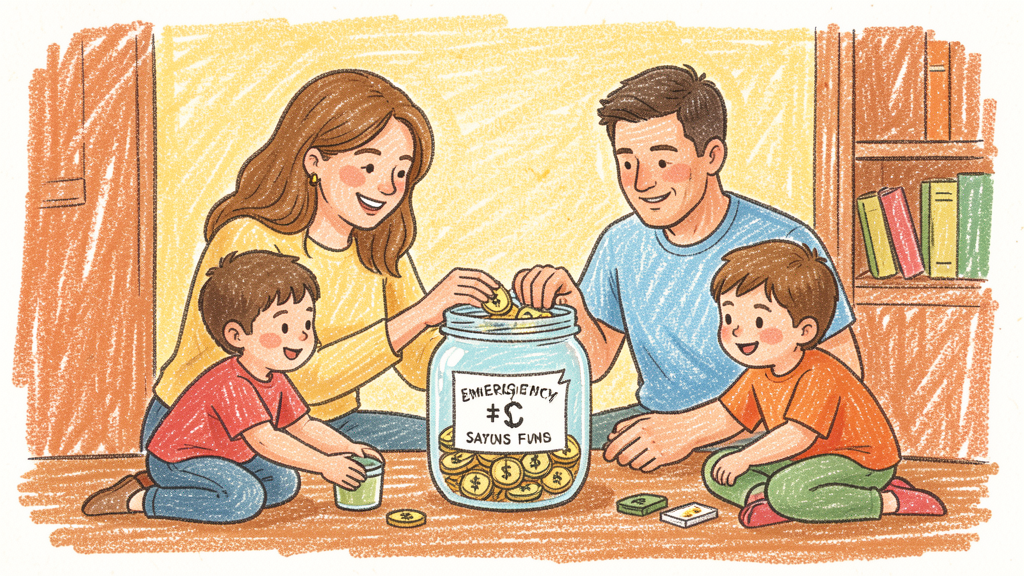
Emergency Fund Guide for Families: How Much Do You Really Need?
Calculate exactly how much your family needs in an emergency fund. Learn how to build it fast, where to keep it, and when to use it.
The 50/30/20 Budget Rule for Families: A Complete Guide
Learn how to apply the popular 50/30/20 budgeting method to your family finances. Discover how to allocate income for needs, wants, and savings as a household.